
Buying a Toyota Hiace Headlight in New Zealand
A Hiace headlight is not one part. Which one you need depends on the generation, the year within it, and the side — and in New Zealand, on whether the replacement is legal for a warrant of fitness.
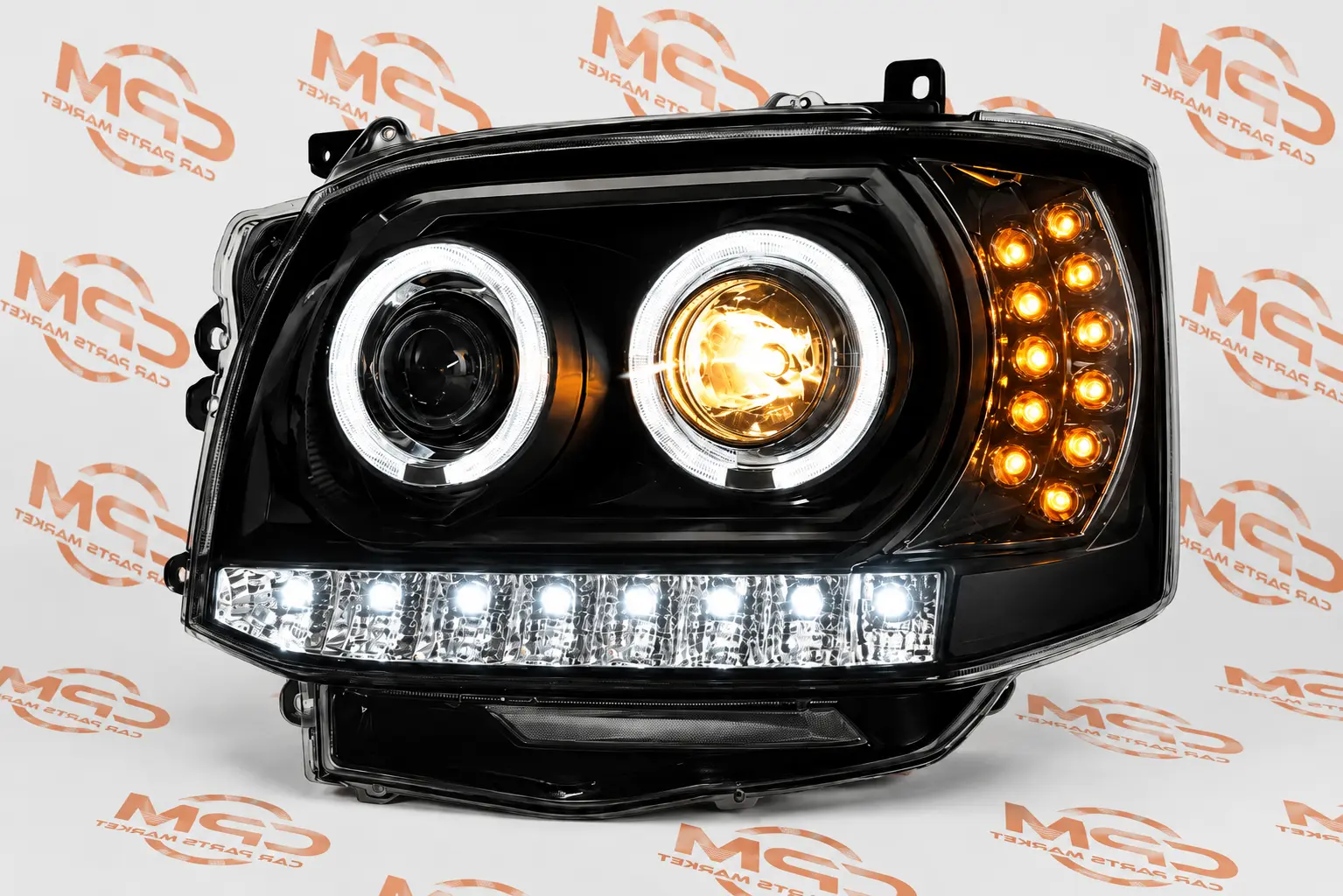
A Toyota Hiace headlight is not a single part. Which one you need depends on three things: the generation of the van, the year range within that generation, and which side you are replacing. Get any of the three wrong and the unit will not mount, will not seal, or will be the mirror image of the one you need.
This guide covers all three, plus the New Zealand-specific question of what makes a replacement legal for a warrant of fitness.
Which Toyota Hiace headlight do I need?
Start with the generation, because no headlight crosses one. The Toyota Hiace H100, H200 and H300 have different front structures and different lamp apertures, and a headlight designed for one will not fit another.
Car Parts Market currently holds 26 Toyota Hiace and Nissan Caravan headlights. On the Hiace side that is 6 for the H100, 10 for the H200 and 2 for the H300.
- Bonnet ahead of the windscreen, 2019 or later — that is an H300. Browse Hiace H300 parts.
- No bonnet, 2005–2020 — that is an H200. Browse Hiace H200 parts.
- No bonnet, 2004 or earlier — that is an H100. Browse Hiace H100 parts.
If you are unsure which generation you have, the bonnet is the reliable test. The Toyota Hiace H300 has a short bonnet ahead of the windscreen; the H200 and H100 are cab-over vans where the windscreen drops straight to the bumper.
Will an H200 headlight fit an H300?
No. The Toyota Hiace H300, launched in 2019, moved to a semi-bonneted body on Toyota's IMV ladder-frame platform — the same architecture as the Hilux. The H200 is a cab-over van with the engine beneath the front seats.
The two share no front-end mounting points, no lamp aperture and no panel profile. An H200 headlight will not bolt to an H300, and the reverse is equally true. The same applies to the grille, bumper, bonnet and guard.
This matters commercially as well as practically: H200 headlights are more plentiful and often cheaper than H300 units, which makes the question a tempting one. The answer does not change.
Does a 2005 Hiace use the same headlight as a 2014 Hiace?
Not necessarily, even though both are H200s. The Toyota Hiace H200 ran for fifteen years and was facelifted during that run, and the front lighting changed with it.
This is why every Car Parts Market headlight listing carries a specific year range rather than just "H200". Some cover the full 2005–2020 span; others are narrower, such as 2010–2013 or 2014–2020.
Check the year range on the listing against your van's build date, not its New Zealand registration year. For a Japanese import those two frequently differ by several years, and the build date is the one that determines which parts were fitted.
If the listing's range includes your build date, the headlight fits. If you are working from a registration year on an import, send the chassis number through and have it confirmed before ordering.
LH or RH — which side do I need?
In New Zealand, RH is the driver's side and LH the passenger's, because New Zealand is a right-hand-drive market.
Car Parts Market states the side on every headlight listing where it applies. Headlights are sold individually, so replacing both means ordering two.
Two things to watch:
- Overseas listings use the opposite convention. A part described as "LH" on a left-hand-drive market site is the driver's side there. If you are cross-referencing part numbers from an overseas catalogue, confirm the side against the New Zealand listing rather than the number alone.
- Stand behind the van, not in front of it. Sides are described from the driver's seat looking forward. The headlight on your right as you sit in the driver's seat is the RH unit.
Can I fit LED bulbs to a Hiace headlight?
Not to a headlight designed for halogen — it is a warrant of fitness failure. The New Zealand Transport Agency's inspection manual rejects a headlamp "retrofitted with a type of light source other than that specified by the vehicle manufacturer or the headlamp manufacturer", naming LED and HID bulbs directly.
The reason is optical. A halogen headlight places the filament at a precise point in the reflector. An LED bulb puts its light source somewhere else, and the reflector scatters light where it was never meant to go — usually into oncoming drivers' eyes. The result can be both illegal and worse at lighting the road than the halogen it replaced.
The lawful route to LED lighting is a complete headlight unit designed for LED, where the housing, reflector and light source were engineered as one. Car Parts Market stocks LED-specific units alongside standard halogen replacements, including HID and LED options for the Nissan Caravan NV350.
For more on what an inspector checks, see the WoF parts page.
When does a headlight need replacing rather than repairing?
Three faults mean replacement rather than repair, and all three are warrant of fitness failures in their own right:
- A cracked or holed lens. The inspection manual rejects a lens "missing, or has a hole, crack or other damage that allows moisture or dirt to enter". Sealing a crack from outside does not restore the seal.
- Water inside the housing. Moisture "in the form of large droplets, runs or puddles" is a failure. Light misting that clears is generally accepted; water pooled in the bottom is not, and means the seal has gone.
- A hazed or yellowed lens that reduces output. Polishing buys time on light oxidation, but a lens that has deteriorated far enough to cut light output has failed, and polishing removes more of the protective coating each time.
A blown bulb is the exception and is usually the cheapest fix of any of them.
Ordering
Browse Toyota Hiace headlights by vehicle, or the full headlight category across every vehicle Car Parts Market stocks. Each listing states the generation, the year range, and the side.
Car Parts Market is based at 11A Akatea Road, Glendene, Auckland. Orders ship throughout New Zealand and to Australia — see delivery for options and timing — and click and collect is available from the Glendene warehouse.
New aftermarket headlights carry a three-month warranty; terms and conditions apply. Where compatibility has been confirmed in writing before purchase, the Fitment Guarantee applies. To have fitment checked against your van, email support@carpartsmarket.co.nz or phone 09 243 1350 with the registration or chassis number.
Frequently asked questions
Will a Toyota Hiace H200 headlight fit an H300?
- The H300 moved to a semi-bonneted body on a ladder-frame platform in 2019, while the H200 is a cab-over van. The front structures share no mounting points or lamp apertures, so no H200 headlight fits an H300. The bonnet is the quickest way to tell which generation you have.
Are Hiace headlights sold in pairs or singly?
Singly. Car Parts Market lists left-hand and right-hand headlights as separate products, so replacing both means ordering two. In New Zealand's right-hand-drive vehicles, RH is the driver's side and LH the passenger's — the reverse of the convention used on many overseas sites.
Can I put LED bulbs in my Hiace headlights in New Zealand?
Not in a halogen headlight. The NZTA inspection manual rejects a headlamp retrofitted with a light source other than the one specified by the vehicle or headlamp manufacturer, naming LED and HID bulbs. A complete headlight unit built for LED is compliant, because the housing and light source were designed together.
How do I know which year Hiace headlight I need?
Every Car Parts Market headlight listing carries a year range. Match it against your van's build date rather than its New Zealand registration year — for a Japanese import the two often differ by several years, and the build date determines which parts were originally fitted.
Does condensation in a headlight fail a New Zealand WoF?
It depends how much. The inspection manual rejects a lamp containing moisture "in the form of large droplets, runs or puddles". Light misting that clears as the lamp warms is generally accepted. Water pooled in the bottom of the housing is a failure and usually means the lens or seal has been breached.
Source. Headlamp requirements quoted from the NZ Transport Agency Vehicle Inspection Requirements Manual, in-service WoF and CoF: 4-1 Headlamps.